

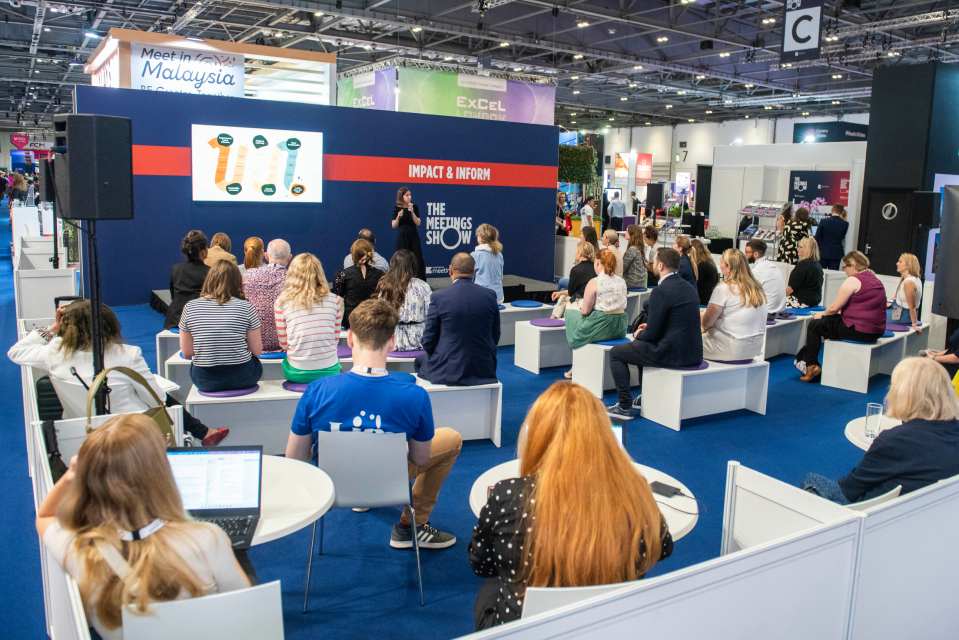
There’s no question about it. The Meetings Show 2025, the UK’s leading event for the meetings and events industry, once again proved that it’s not just a place to connect, but a platform leading the change in events…
With an agenda rooted in relevance, this year’s show didn’t just respond to today’s challenges, it anticipated tomorrow’s. From shifting workforce dynamics to sustainability, wellbeing, crisis planning, and the power of purposeful content, the show sparked bold conversations and laid down a marker for where the events industry is headed.
Gen Z are no longer the future—they are the now
One of the loudest and most refreshing messages to emerge from The Meetings Show 2025 was this: stop rolling your eyes at Gen Z. Instead, listen, because they’re already leading. Nowhere was this more evident than in the Tomorrow’s Talent winners, 10 gifted individuals who were recognised for their contributions to the industry in an initiative run through the show.
They expertly took the stage as emcees for the education sessions and brought clarity and confidence to conversations around inclusivity, mental health, and meaningful career pathways.
With 70% of the global workforce expected to be made up of Millennials and Gen Z by 2025, the industry must move away from forcing new talent into outdated systems and instead reshape those systems around purpose, flexibility, and empathy. In a session titled ‘The Reckoning: Talent & Workforce Development – What’s Next For Our Industry?’, Natasha Bahia, a Tomorrow’s Talent winner, highlighted how networking events can still feel “cliquey,” and those attending events at an entry level can often feel excluded.
Caroline Gourlay, Head of B2B Exhibition Sales at Excel London and Women in Exhibitions president echoed this thought and suggested reverse mentoring as a solution to breaking these cycles.
“We need to help people entering the industry build networks. Reverse mentoring is a great way for leaders and managers ‘to see what’s happening on the shop floor’ so they can understand the perspectives of newcomers to the industry and learn from them too. This will help us bridge gaps between all generations.”
Events in a fragile world
The global climate, both political and environmental, featured heavily in conversations this year. Planners shared examples of cancelled events in the Middle East and Europe due to floods, conflict, and unpredictability. Where contingency planning was once theoretical, it is now a daily reality. Travel disruption, extreme weather, cyber threats: “what if” has become “what next,” reshaping everything from budget allocation to schedule design.
Mental health was also brought to the forefront. Structured downtime post-event, more realistic delivery timelines, and formal mental health standards were proposed as steps toward healthier, more sustainable working models. Delegates applauded the call from Sammy Connell, Conferences and Events Manager NASUWT – The Teachers’ Union, for a cultural reset when addressing a culture that can often glorify exhaustion: “Working long hours shouldn’t be worn as a badge of honour.”
Sustainability is out, responsibility is in
This year’s sustainability conversation got a much-needed refresh. The session “The Reckoning: What’s Next for Sustainability?” didn’t just call for greener events, it called for a rebrand. “Sustainability” as a word has lost its edge. Instead, the focus shifted to responsibility—personal, organisational, and industry-wide.
The show floor called to make responsible behaviours in the workplace a part of life. In the same way that you may feel uncomfortable asking for a plastic bag at the supermarket on not using a refillable bottle, true sustainability needs to be accessible and desirable, not burdensome. From promoting responsible train travel, to creative event design that cuts waste, and cracking down on greenwashing with legislative teeth, the message was clear: the future of sustainable events lies in honest communication, strategic collaboration, and a huge shift in attitude.
Soft productivity, hard purpose
The business of events is undergoing a much-needed mindset transformation. The era of back-to-back sessions and “work hard, play hard” energy is giving way to what’s been termed soft productivity—a focus on wellbeing, emotional connection, and meaningful outcomes. Delegates no longer want to leave events feeling more tired than when they arrived.
The trend extends to content, too. Flashy stand gimmicks are being replaced by authentic communication, intentional design, and visuals that align with purpose. One session reframed ROI as ROP: Return on People, and that concept echoed across the show. Smaller, purposeful meetings that foster human connection are not just more engaging, but feedback proves that they’re more effective.
From skills shortage to culture shift
While the headlines speak of a talent crisis, recruiters and insiders at The Meetings Show 2025 offered a more nuanced view. “There isn’t a shortage of people,” said Robert Kenward, Fitability Recruiter at You Search & Select, “there’s a shortage of realisation. Employers need to be more mindful of the needs of the future workforce, plus consider older workers – don’t sideline them. Confidence is low in all ages. There are good initiatives to develop people out there but aren’t all taken advantage of.”
The problem isn’t numbers; it’s the mismatch between traditional working models and the expectations of today’s workforce. Outdated hierarchies, long hours, and underrepresentation continue to act as barriers. The path forward isn’t about chasing new hires, it’s about creating cultures where people at all stages want to stay and grow.
Progress needs presence
In an increasingly hybrid world, some powerful stats continue to cut through the noise, highlighting the continued value of in-person connection. According to a survey by Skift, over 71% of small businesses have generated new business through face-to-face networking at trade shows, underlining the critical role these events play in lead generation. Attendees and stakeholders alike are prioritising high-value, productive interactions, with 64% of respondents reporting a higher interest in networking sessions compared to 2019. The Meetings Show 2025 understood the current climate and hosted 60 structured educational sessions, all of which offered valuable opportunities to learn new skills and network with the right people.
From insightful sessions to raw, necessary discussions, The Meetings Show 2025 was more than a trade show, it was a catalyst for change. For many, it marked a renewed sense of purpose. A reminder that the future of events isn’t something to wait for, it’s something to co-create. The next era of events looks bolder, braver, and more human than ever.
You can also read about the International Event Sentiment Report 2025 findings.