

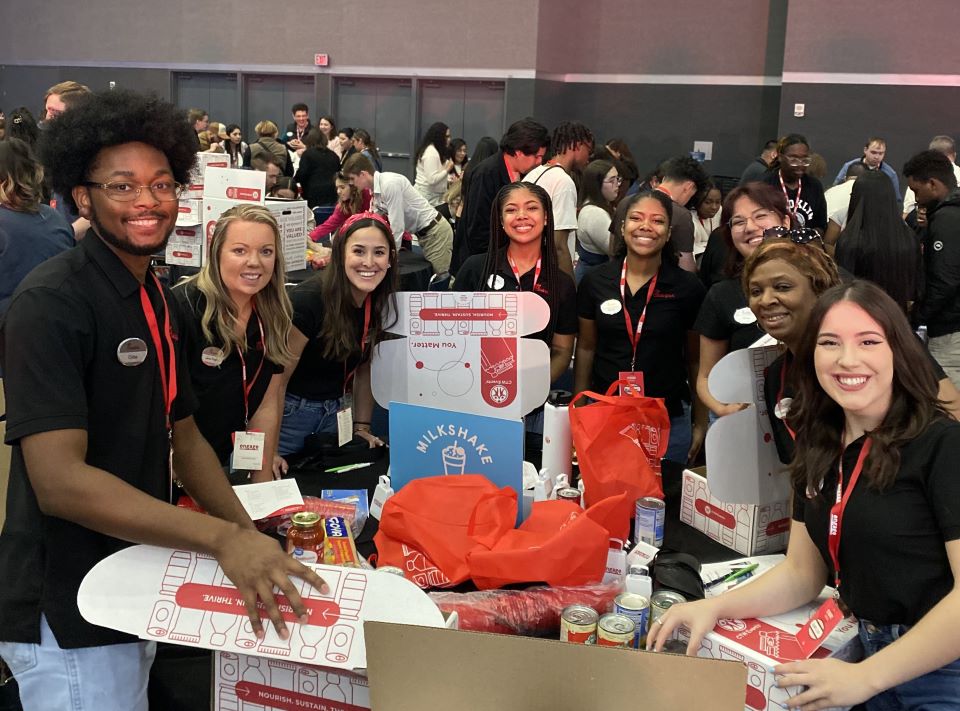
Madison Ayache, Vice President of CTW Events, a Clean the World Global brand, explores how team-building with purpose can be achieved with volunteering. Benefits are measurable in stronger workplace culture with positive impact for employees, organisations and communities…
When you think of team building, what comes to mind?
When I ask this question, the most common answers I get are creative challenges like building the tallest tower from spaghetti, or problem-solving challenges such as scavenger hunts or escape rooms. While these types of traditional exercises might generate a few laughs, the short-term fun and their impact on culture, engagement or purpose is often fleeting.
Our recent Team Building in a Changing Workplace survey found that almost nine in ten employees have participated in team-building activities in the past year, with the most common formats being social events (31%), followed by volunteering and community initiatives (27%), and skill-based activities such as workshops or training (23%).
Where purpose-led volunteering stands apart is in the depth of its impact. Employees report clear benefits: 92% say it strengthens relationships with colleagues, 89% feel more connected to their company’s values, and 85% report higher job satisfaction. Experiences built around shared purpose break the predictability of traditional team building while delivering tangible outcomes for employees, employers and communities.
Prioritising purpose in volunteering
While traditional team building still has a role, employee expectations are shifting. Our survey revealed that 83% of employees are more likely to participate in team building if it has a social or environmental impact. And 81% prefer a mix of volunteering and traditional activities. Community volunteering was rated the most valuable activity overall, with more than half (52%) of respondents awarding it a 5/5 rating. Over half (51%) even admit feeling guilty when they can’t volunteer as much as they’d like, a clear signal of how much people value meaningful contributions.
These findings are reinforced by wider research, especially when it comes to the expectations of younger employees. Deloitte’s 2024 Global Purpose Survey, for example, found that 90% of Gen Z and Millennials view purpose as critical to job satisfaction and wellbeing, with growing numbers choosing employers based on purpose and social impact rather than salary alone. Together, this evidence shows that purpose-led work is not a passing trend and that employers must actively respond to these evolving expectations.
There is also a clear economic case. Research from the Royal Voluntary Service and the Centre for Economics and Business estimates that fully utilised employee volunteering could unlock £32.5 billion in productivity gains for the UK economy, while 87% of UK businesses say volunteering is important to their purpose and ESG goals.
Team-building with purpose by making volunteering accessible
However, even the most meaningful team building initiatives can fall flat if participation is difficult. Our survey found that 85% of employees would be more likely to volunteer if the process were simpler, such as being coordinated through work or volunteering outside standard hours, with 42% of those surveyed stating they would prefer this. These insights highlight that accessibility and flexibility are therefore essential to unlocking engagement.
In the UK, many organisations offer employee volunteering days, yet a significant proportion go unused each year due to a lack of structure, time or internal resources. Flexible, scalable ready-made programmes help remove these barriers, turning volunteering into genuinely inclusive and high-impact experiences that benefit everyone.
Embedding purpose
Accessibility is a key step, but it is not enough on its own. Real impact comes when volunteering is embedded into business culture rather than treated as a one-off activity. Currently, just 3.8% of organisations offer six or more volunteering days per year, with most UK workplaces providing only a single day annually. This makes it far harder for volunteering to become part of everyday culture and can instead feel more like tick-box initiative.
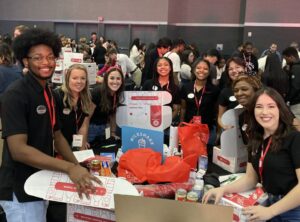
At CTW Events, we support businesses to embed purpose at scale. Since launching in 2012, we’ve mobilised more than 284,000 volunteer hours to assemble over 7.5 million kits for over 1,000 charity partners worldwide, delivering measurable social impact alongside meaningful employee experiences.
Looking ahead
Attitudes towards team building are clearly evolving. Hybrid working, wellbeing pressures and rising expectations around ESG and social impact mean traditional approaches alone can no longer deliver the connection and engagement employees seek.
For businesses, the opportunity is clear. Offering flexible, scalable, purpose-led volunteering creates shared experiences that unite teams, reinforce values and deliver real-world impact. Organisations that lead with purpose will not only strengthen culture and engagement but also position themselves as employers of choice.
In 2026 and beyond, companies that lead with purpose will see the difference in their people, their culture and the wider world.
For more information on CTW Events teambuilding activities, please visit www.ctwevents.org. Download the full Team Building in a Changing Workplace survey here.