


The UK uses an estimated 227,000 miles of wrapping paper each Christmas – that’s enough to reach the moon (384,400 km). Many wrapping papers cannot be recycled due to containing plastics such as glitter or laminates, sending them straight to landfill. Research by Greenpeace found that 1kg of wrapping paper is responsible for more than 3kg of CO2 emissions during its production process. Let’s look at ways to reduce waste at Christmas…
- Image: Camptoloma @ shutterstock.com
UK residents send around 114,000 tonnes of plastic packaging to landfills during the Christmas period, due to improper recycling – check out some of the recycling myths. Online shopping, which surges in the leadup, creates five times more packaging emissions than in-store purchases, with delivery boxes, bubble wrap, and protective materials adding to the waste mountain[2].
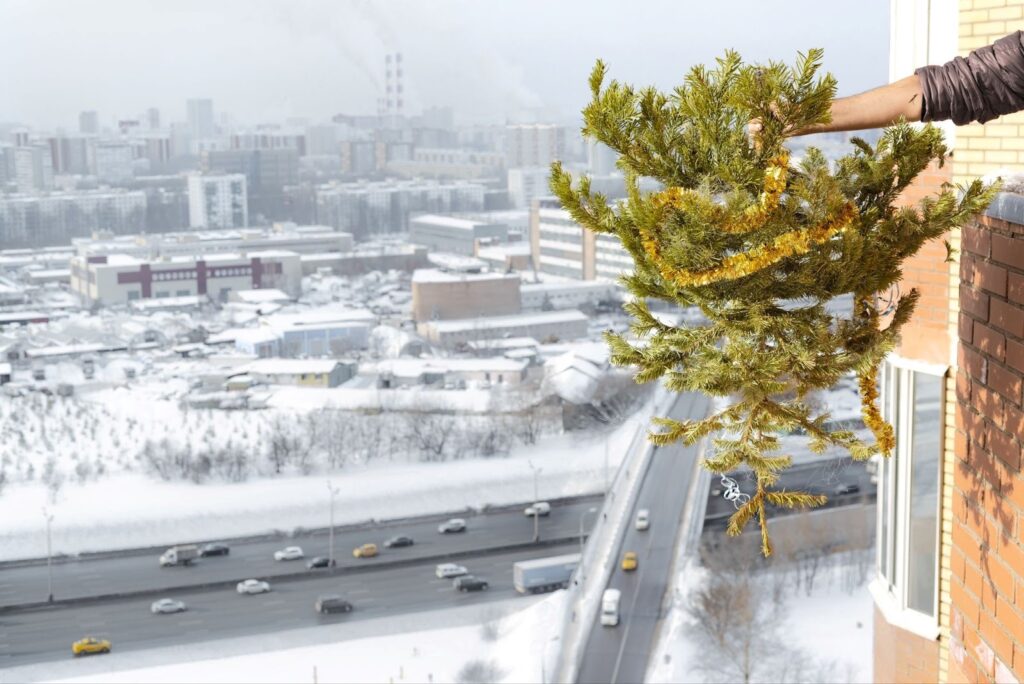
Improper disposal of trees, real and fake, adds to the problem. Approximately 7 million real Christmas trees are bought in the UK annually, which brings serious disposal challenges, with estimates that around 160,000 tonnes worth are dumped each January.
It’s suspected that fakes are purchased in the millions annually. Still, whilst many assume fake trees are the greener option, they carry 10 times the carbon footprint of real trees (approx. 40kg of CO2, resultantly taking 10 years of use to offset this figure. Yet reports suggest many keep their artificial trees for just 4 years before discarding them. Even worse, over 1 in 10 admit to throwing them away annually rather than storing them.
Perhaps most shocking is the food waste. A record high of £460 per average household was spent on Christmas groceries last year, according to a Kantar report, yet painfully, 200,000 tonnes of that food was wasted – equivalent to 6.6 million bins full.
Councils call for more responsible waste disposal, following hazards
Local councils across the UK urge residents to dispose of their Christmas trees responsibly and reduce festive waste. Many offer dedicated tree collection points and recycling schemes, yet improper disposal remains a persistent problem and strains local areas, despite varying fines of up to £1000. Following last December. Brighton and Hove’s Councillor Tim Rowkins, Deputy leader and cabinet member for Net Zero and Environmental Services, shared.
“We have seen a lot of trees left on roadsides, alongside communal bins, or in parks and open spaces. If we have to divert staff to clear trees on an ad hoc basis from these locations, then those staff can’t do their usual work to keep the city clean, and in most cases will mean the trees are not recycled. It can also impact the accessibility of pavements near our communal bins and potentially cause problems for motorists and pedestrians.”
Cllr Krupa Sheth, Cabinet Member for Environment at Brent Council, had similar urges.
“Protecting the environment is one of our Council’s top priorities. Burning or dumping Christmas trees adds to the problems already faced. Please use one of the many different ways we have provided to dispose of your tree, and help us to keep the planet greener and cleaner.”
Last Christmas, the sheer volumes of waste alone forced the Carmarthenshire council to explain to residents via newsletter that they were “Unable to complete collections due to volume/quantity of waste present”.
Miroslav Radov, waste expert at Rainbow Rubbish, comments on the Christmas trash calamity.
“Christmas has become a season of extreme excess, and much of the waste generated is entirely avoidable. From trees dumped on street corners to mountains of packaging from online orders, councils are overwhelmed during the festive period. Real Christmas trees can be recycled or repurposed in gardens, yet thousands end up in landfills or abandoned. The rise in online shopping also means more packaging waste than ever before, and with record amounts being spent on groceries, huge quantities of delicious food are being thrown away.
Changes in how we shop and celebrate can make a scalable difference to communities, the environment, and finances. and communities, and it doesn’t have to be difficult. Just a few simple efforts can make a far less damaging impact ”
Experts reveal: 6 ways to reduce your festive footprint & waste at Christmas🎄♻️
- Shop in person – Online orders create five times more packaging emissions than in-store purchases. By shopping locally and in person, you can significantly reduce packaging waste and support local businesses.
- Get creative with decorations – Make decorations from recycled items, clay, or dried oranges and spices such as cinnamon, which are much easier to break down, plus add a festive scent. Thrift decorations from charity shops or swap with others, and donate old decorations rather than throwing them away.
- Buy loose produce or bulk items – With grocery spending reaching record highs at Christmas, reducing packaging waste from food purchases can make a real difference. Choose bulk buys or loose produce over pre-packaged alternatives to cut down on unnecessary wrapping; despite some having slightly higher costs, you can get the exact amount needed of the best-looking items.
Miroslav adds:
“To avoid picking up extra bags whilst shopping, consider bringing reusable produce bags to place your fruit and veg directly into after weighing, using a single bag – rather than taking home several – to cover the scale if you’re wary of germs”
- Repurpose wrapping – Less delicate paper can be carefully folded and stored away for the following year, with ribbons and gift bags being easily salvageable, reducing household trash and saving money on future gifting occasions.
Miraslov shares a quick hack on knowing how to dispose of wrapping if it’s unrecoverable: “With such a high volume of recyclable packaging ending up in landfills each Christmas, knowing how to identify where something goes is essential. For wrapping paper, you can check by scrunching it in a ball – if it stays screwed up, it’s good to recycle – if not, it belongs with household waste.”
- Scale back on groceries and get inventive with leftovers – With nearly 200,000 tonnes of food wasted at Christmas, planning your shopping carefully can prevent excess. Consider recipe generator apps if you’re unsure what to do with leftovers, and freeze items that won’t be eaten immediately.
- Recycle or repurpose your Christmas tree – Check your local council’s tree collection points, or repurpose your tree in the garden. Branches can protect plants during winter, while chipped wood has several benefits – some councils offer free chipping services. If you have space, potted trees can even be replanted and grown outside until the following year.