

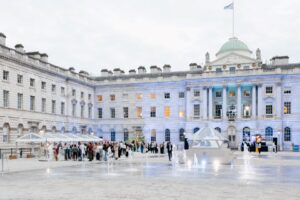
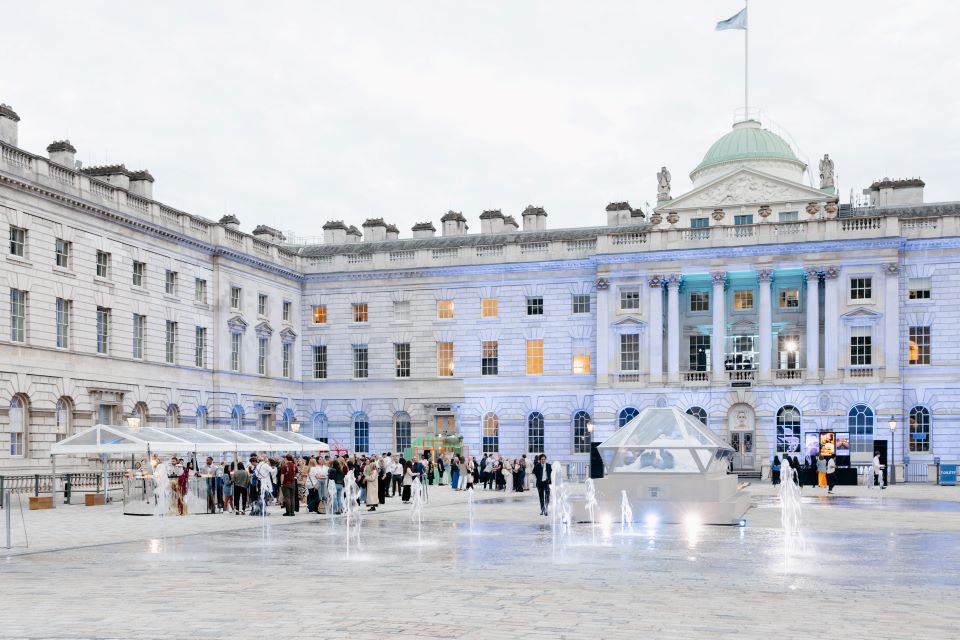
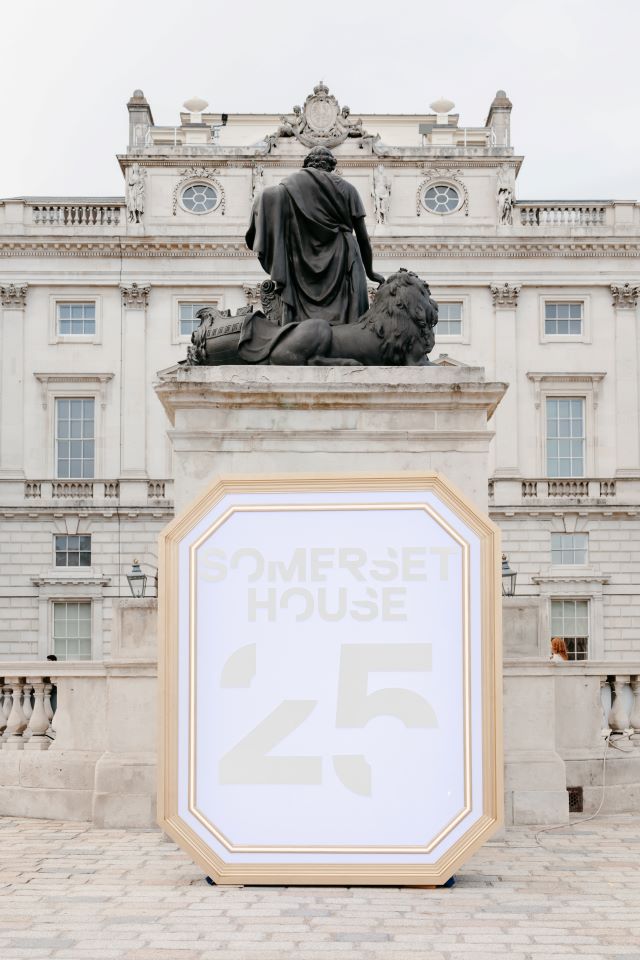
The grand central London landmark building of Somerset House marks its 25th anniversary as an events venue this year. Their latest insights paper, ‘An Eventful 25 years’, is a sector-focused review of events evolution over the last quarter century and how it looks set to transform in the decades ahead…
Launched as part of Somerset House’s 25th anniversary programme, the paper draws on perspectives from its resident community, creative partners and accredited suppliers. The aim is to analyse key shifts across audience behaviour, technology, sustainability, catering, floristry and production.
Bringing culture and commerce together
Positioned at the intersection of culture and commerce, Somerset House has become a barometer for event‑sector change. The venue hosts major commercial events, brand activations, corporate gatherings and cultural showcases from partners including Dior, MMGY Global and London Design Biennale.
The paper highlights how the UK’s events ecosystem has evolved, whilst outlining the key forces shaping contemporary events and setting out bold predictions for the future of the sector.
Key insights from 25 years of event evolution and what to expect next include:
1. A shift in audience expectations
Event attendees expect immersive, participatory experiences moving well beyond keynote-led agendas. Curated interaction, emotional resonance, narrative‑driven content and on‑site personalisation are now central to event success.
2. Technology is reshaping event design and delivery
The paper highlights the acceleration of:
• AI‑enabled personalisation and agenda-shaping
• Sensory‑enhanced environments
• Hybrid and multi-access participation models
Technology now plays a strategic role in experience design, measurement and operational delivery.
3. Sustainability has moved from priority to baseline expectation
From zero‑waste menus and plant‑forward dining to foam‑free floristry, carbon‑tracking tools and modular scenic design, the requirement for environmentally friendly events is considered as non-negotiable in venue and supplier section.
4. Catering reflects cultural and generational change
Food now plays a key role in reinforcing brand values and event identity with caterers reporting a shift towards ingredient‑led storytelling, circular systems, and inclusive menu design. Plant‑centric and hyper‑local dishes now reflect both guest expectations and wider cultural movements.
5. Floristry has become a core part of experience design
Floral design has evolved from decoration to narrative – driven by social‑media‑ready installations, multi‑sensory storytelling, circular supply chains and collaborations with local growers and charitable partners.
6. Production innovation is accelerating
Across the industry, production partners highlight growth in:
• Immersive AV environments
• AI‑driven technical precision
• Sustainable scenic builds
• Data‑backed content optimisation
The report forecasts that AI‑designed environments and XR-infused performance will soon become mainstream.
7. Long-term trend-watching signals events sector in transition
The paper’s forward‑looking “25 for 25” map forecasts developments including:
- ROI‑driven event design
- Carbon‑linked budgeting
- Emotion-responsive environments
- Hyper‑personalised attendee journeys
- Greater integration of wellbeing and neuro‑inclusive design
Jenny Freestone, Commercial Director at Somerset House, comments: “This paper reflects not only the extraordinary evolution of Somerset House, but of the entire events sector. Over 25 years we have seen events shift from traditional gatherings to powerful cultural moments that build community, shape behaviour and define brands. As the Home of Cultural Innovators, we’re proud to share insights that celebrate creativity, champion diversity, and help the industry navigate what the next quarter‑century might hold.”