



The traditional corporate away day is evolving. Post-pandemic, many companies have moved to hybrid working, and the old model of “close the office, book a hotel, spend £5k+ on a full-day retreat” feels increasingly outdated…
Nevertheless, team building and meaningful social connection haven’t gone away, and tend to be more important than ever. The challenge for PAs and EAs therefore is how do you create authentic team-building moments without the logistical headache, cost, and time commitment of traditional away days?
Forward-thinking companies are exploring different answers. Some are leaning into shorter, more frequent micro-events. Others are investing in flexible on-site spaces (breakout areas, wellness facilities, entertainment venues). A growing number are considering something that is a little bit bespoke and inhouse by installing purpose-built spaces right on the office site or at accessible locations, so team activities can happen without full-day logistics or travel.
One approach gaining real traction is garden rooms equipped with interactive entertainment that can host everything from informal team socials and client entertaining to staff rewards and cross-departmental competitions. It’s not a replacement for all away days, but for many teams, it’s become a practical, weather-independent alternative that fits modern working patterns and budgets.
Why is the shift in team building happening?
Research shows that hybrid work is now the default model, and the nature of team building has changed with it. When colleagues are scattered across home, office, and remote locations, pulling everyone together for a full-day off-site feels clunky. Travel time eats into schedules, coordination becomes a logistical nightmare, and for hybrid workers, the maths don’t add up. Why come into the office on your designated day, then disappear for a team event?
As a PA or EA, you’ve probably felt this pressure. You’re managing calendars that don’t align, travel budgets that stretch further each year, and teams increasingly reluctant to give up full days for traditional away days.
Recent analysis of team building trends shows that employees now favour authentic, flexible experiences over scripted activities. They want connection, but on terms that work with their working lives.
What makes garden rooms appealing for team building
A garden room on the office site or nearby location offers something simple but powerful: a dedicated space for team activities without the logistical overhead of traditional away days. From an EA or PA perspective, this changes the game.
Weather-independence
No rain cancellations, no contingency planning, no last-minute scrambling. Your team can enjoy consistent experiences year-round, scheduled flexibly around office calendars. You can confidently book activities weeks in advance without worrying about weather disruptions.
Proximity and convenience with sustainable travel
An on-site or nearby leisure focused facility means minimal travel time. Your team spends less time commuting and more time bonding. Hybrid workers have a genuine reason to come in on certain days, and if someone can’t make it, the activity is close enough that rescheduling is straightforward. For you, this means fewer coordination headaches.
Flexibility
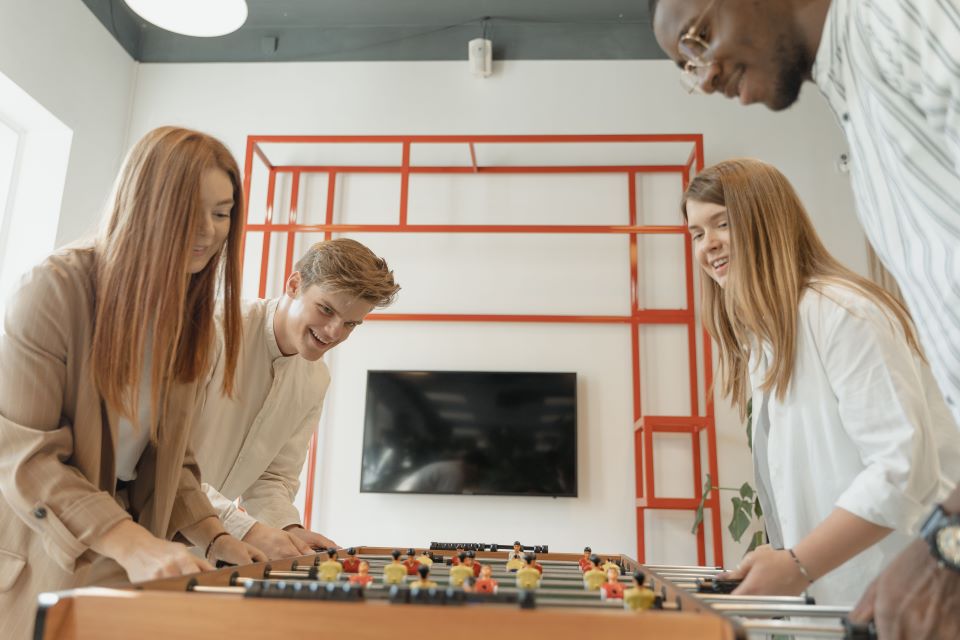
A dedicated set up becomes a multi-functional space allowing for informal team competitions on Friday afternoons, client entertaining, staff rewards, even executive networking. Some companies use them for breakout sessions during conferences or quiet reflection spaces. Whether equipped with golf simulators, arcade games, pool tables, or comfortable seating with good coffee, the space adapts to your team’s needs.
The logistics Executive Assistant and Personal Assistants need to know
If you’re considering this investment for your organisation, here’s what you need to understand.
Planning permission is usually straightforward with most garden rooms structures falling under permitted development rights. However, if your building is over a certain height or close to a boundary, permission may be required. Specialists can handle this consultation as part of their design process.
Cost typically ranges from £30,000 to £55,000 for the build itself, depending on size and specification. Any entertainment equipment is usually quoted separately. The total investment sits in the realm of what companies might spend on a single large team event, but spread over several years, the cost-per-use becomes very attractive.
The timeline from deposit to installation is usually around 8 weeks. The build includes foundation work, professional installation, insulation, climate control, and finishes. A well-built garden room then lasts 25-30 years with routine upkeep.
Real-world use cases
Here’s how companies are actually using these spaces. As a PA or EA, you might recognise your own team needs.
Team bonding
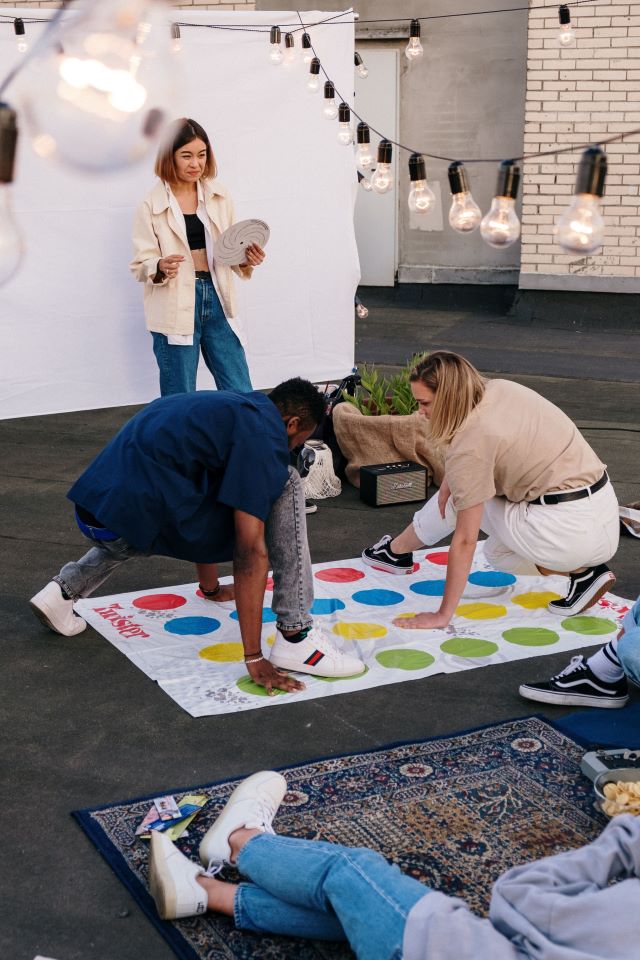
Friday afternoons were made for competitions between departments, quick 30-minute slots with a leaderboard and bragging rights, no full day required. Hybrid workers get a genuine in-office draw. You avoid the logistics nightmare of coordinating an away day, and the activity becomes a natural part of your team rhythm rather than a special event that disrupts workflow.
Client entertaining
When a client visits, instead of a generic lunch, you can offer them something more engaging. The key is designing a purposeful and considered space around a specific activity from the start, whether that’s a golf simulator, arcade games, or another activity. Providers like Golf Swing Systems specialise in this integrated approach, ensuring the bespoke garden room installation suits both the activity and your entertaining goals. It’s memorable, different, and gives genuine dialogue space outside the boardroom.
Staff reward
Your team hits Q3 targets. You organise a reward slot in the garden room where they pick a colleague and enjoy some downtime. Tangible recognition that feels meaningful and creates a talking point across the office. No expensive external venues required, and the activity becomes part of your recognition culture rather than a one-off treat.
Hybrid-work flexibility
Teams can schedule collaborative days around your entertainment space. Tuesday is “garden room day,” a concrete reason for hybrid workers to align schedules and increase on-site presence naturally. For you,this creates predictability in team coordination, reduces constant calendar juggling, and gives hybrid workers a genuine incentive to come in on designated days beyond just to attend meetings.
The investment case
While culture and wellbeing are strong elements of the team building process, your leadership team will want to see the financial logic behind the idea. One traditional away day (venue hire, catering, transport, coordination time) typically costs £3,000-£8,000 and requires a full working day. A garden room installation is a one-time capital investment that supports dozens of activities per year for a decade or more, meaning the figures work strongly in its favour.
Team building strengthens workplace connections and improves engagement. Accessible spaces for informal bonding correlate with stronger relationships and better communication. Additionally, flexible team activities improve employee satisfaction and retention.
Higher retention means less disruption to your team management. Better engagement means fewer morale issues to navigate.
The wider shift: the evolution of the office
What’s interesting about this trend is that it reflects a deeper change in how companies think about the office. It’s no longer “the place everyone works.” It’s becoming “the place where meaningful things happen” (collaboration, connection, culture).
For PAs and EAs, this shift offers a genuine opportunity. Instead of coordinating complex away-day logistics, you can pilot something simpler, more accessible, and genuinely useful to your teams. It won’t replace all off-site events, but it fills a real gap in the hybrid era: the need for flexible, low-friction team activities that don’t require a production budget.
If your team’s been looking for a way to boost connection without the away-day headache, this might be worth a conversation with your leadership team.